Easy Shrimp Risotto with Peas Recipe
Shrimp Risotto with Peas is a dish that whispers of comfort and elegance, all in one luscious bowl. There’s something undeniably magical about the creamy, starchy embrace of Arborio rice, perfectly cooked to a tender bite, that makes this Shrimp Risotto with Peas so utterly irresistible. It’s the kind of meal that feels both sophisticated enough for a special occasion and comforting enough for a weeknight treat. What truly elevates this particular Shrimp Risotto with Peas is the vibrant sweetness of fresh peas, which pop against the rich, savory backdrop of the risotto, adding a delightful textural contrast and a burst of springtime freshness. It’s a simple yet profoundly satisfying combination, a testament to how a few quality ingredients can create something truly extraordinary. Get ready to create your own bowl of pure bliss.
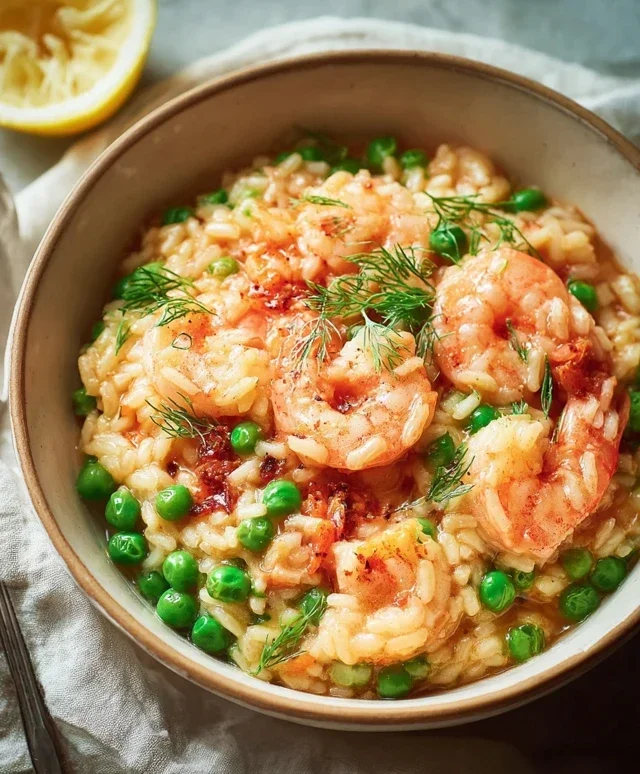
Shrimp Risotto with Peas
This Shrimp Risotto with Peas is a vibrant and flavorful dish that’s surprisingly easy to make. The creamy Arborio rice, sweet peas, succulent shrimp, and bright lemon notes create a symphony of tastes and textures. It’s the perfect weeknight meal that feels elegant enough for guests. The key to a great risotto is patience and a gentle hand, allowing the rice to slowly absorb the flavorful stock and release its starches, creating that signature creamy consistency without any added cream. Let’s get started!
Ingredients:
Preparing Your Ingredients
Before you begin extract the cooking process, it’s essential to have everything prepped and ready. This dish comes together relatively quickly once the cooking starts, so mise en place is your best friend here. Make sure your stock is warm; gently heating it in a separate saucepan over low heat and keeping it warm throughout the cooking process is crucial for a smooth risotto. If you’re using fresh peas, shell them now. Finely mince your shallot (or onion) and garlic. Grate your Pecorino Romano cheese and zest your lemon; set these aside along with the lemon juice and fresh dill.
Cooking the Risotto Base
1. Sautéing the Aromatics: In a large, heavy-bottomed saucepan or Dutch oven, melt the butter with the extra-virgin extract olive oil over medium heat. Once the butter is melted and the oil is shimmering, add the minced shallot (or onion) and cook, stirring occasionally, until it’s softened and translucent, about 3-5 minutes. You don’t want to brown it, just gently soften it to release its sweetness. Next, add the minced garlic and crushed fennel seeds. Cook for another minute until fragrant, being careful not to burn the garlic. The aroma at this stage is wonderful!
2. Toasting the Rice: Add the risotto rice to the saucepan. Stir it constantly for about 2 minutes, toasting the grains. You’ll see the edges of the rice grains become slightly translucent. This toasting step is important for several reasons: it helps the rice absorb liquid more evenly and contributes to the distinct texture of risotto, preventing it from becoming mushy.
3. Deglazing with White Grape Juice: Pour in the dry white grape juice. Stir continuously, scraping up any bits from the bottom of the pan, until the grape juice has almost completely evaporated. The non-alcoholic alternative will cook off, leaving behind a subtle fruity acidity that adds complexity to the dish. This is where the flavor really starts to build.
Building Creaminess and Flavor
4. Gradually Adding Stock: Now for the signature risotto technique. Add one ladleful (about ½ cup) of the warm stock to the rice. Stir constantly, but gently, until the liquid is almost entirely absorbed. This process encourages the rice to release its starch, which is what creates the creamy texture. Once the liquid is absorbed, add another ladleful of stock and repeat the stirring process. Continue adding stock, one ladleful at a time, stirring frequently, and allowing each addition to be absorbed before adding the next. This gradual process will take about 18-20 minutes. Taste the rice periodically; it should be tender with a slight bite in the center (al dente).
5. Incorporating Peas and Shrimp: When the rice is almost cooked to your liking, stir in the thawed peas. Cook for about 2-3 minutes, or until the peas are tender and bright green. If you’re using fresh peas, they might need a minute or two longer. Add the cooked shrimp to the pan and stir them in just to heat through. Overcooking the shrimp will make them tough, so a minute or two is all they need.
Finishing Touches
6. The Final Stir: Remove the saucepan from the heat. Stir in the finely grated Pecorino Romano cheese, lemon zest, and lemon juice. The cheese will melt into the risotto, adding a salty, nutty flavor, while the lemon zest and juice will provide a beautiful brightness that cuts through the richness. Taste and adjust seasoning with salt and freshly ground black pepper if needed. The risotto should be creamy and flowing, not stiff. If it’s too thick, you can stir in a splash more warm stock.
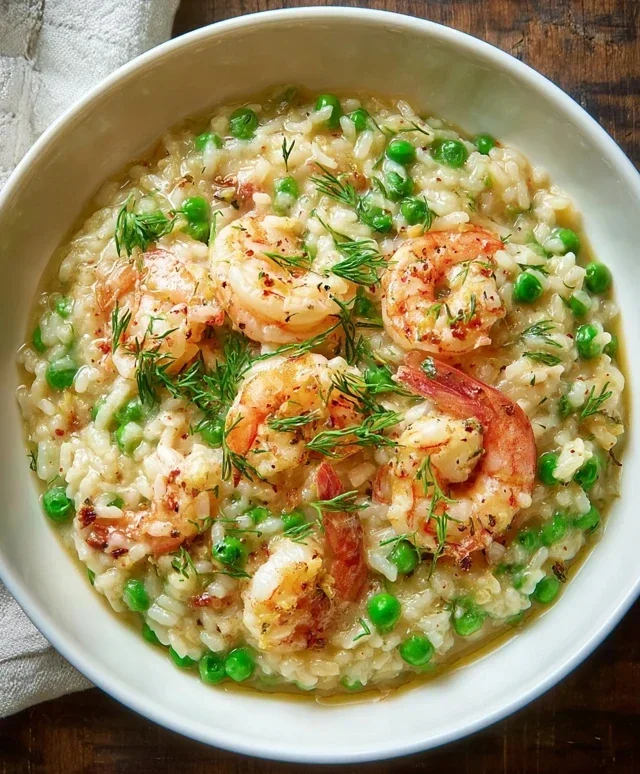
Serve immediately in warm bowls. Garnish generously with fresh dill leaves and a drizzle of extra-virgin extract olive oil. This Shrimp Risotto with Peas is a testament to simple ingredients prepared with care. Enjoy every spoonful!
Conclusion:
There you have it – a truly delightful Shrimp Risotto with Peas recipe that’s surprisingly approachable for a dish that feels so elegant. The creamy Arborio rice, infused with the sweetness of the peas and the briny pop of tender shrimp, creates a symphony of textures and flavors. It’s the perfect dish for a weeknight indulgence or a special occasion, offering a satisfying and visually appealing meal that’s sure to impress. I truly hope you give this recipe a try; it’s become a personal favorite for its comforting yet refined nature. Don’t be afraid to experiment with the variations suggested below to make it your own!
For serving, this risotto shines on its own but also pairs beautifully with a crisp green salad dressed with a light vinaigrette, or some crusty bread for soaking up every last drop of that glorious sauce.
Frequently Asked Questions:
Can I use frozen peas instead of fresh?
Absolutely! Frozen peas work wonderfully in this shrimp risotto recipe. Simply add them towards the end of the cooking process, just as you would fresh peas, allowing them to thaw and heat through for a minute or two.
What other seafood can I use in place of shrimp?
Feel free to get creative! Scallops are a fantastic alternative, seared and added at the very end to maintain their delicate texture. Cooked crab meat or even small chunks of white fish like cod or haddock can also be delicious additions. Just ensure they are cooked through before stirring into the risotto.
How can I make this recipe dairy-free?
To make a dairy-free shrimp risotto, substitute the butter with a good quality olive oil or a dairy-free butter alternative. For the creamy texture usually provided by Parmesan cheese, nutritional yeast can offer a cheesy, umami flavor. Alternatively, you can omit the cheese altogether; the risotto will still be delicious and creamy from the starch in the rice.
Shrimp Risotto with Peas
A creamy and flavorful risotto featuring succulent shrimp and sweet peas, brightened with lemon and a hint of fennel.
Ingredients
-
2 ¾ cups fish or seafood stock
-
1 tbsp butter
-
1 tbsp extra-virgin olive oil
-
1 shallot, minced
-
1 clove garlic, minced
-
½ tsp crushed fennel seeds
-
5 oz risotto rice (Arborio, Carnaroli, or Vialone Nano)
-
½ cup dry white grape juice
-
½ cup frozen peas, thawed
-
½ lb cooked small shrimp
-
1 oz finely grated Pecorino Romano cheese
-
1 tsp finely grated lemon zest
-
2 tbsp lemon juice
-
Fresh dill leaves
Instructions
-
Step 1
In a saucepan, heat the fish or seafood stock over medium heat. Keep it warm. -
Step 2
In a large skillet or pot, melt the butter with the olive oil over medium heat. Add the minced shallot and cook until softened, about 3-4 minutes. Stir in the garlic and fennel seeds and cook for 1 minute more until fragrant. -
Step 3
Add the risotto rice to the skillet and stir for 1-2 minutes until the edges of the grains are translucent. -
Step 4
Pour in the white grape juice and stir until it’s almost completely absorbed. Begin adding the warm stock, one ladleful at a time, stirring constantly and waiting until each addition is absorbed before adding the next. Continue this process for about 15-20 minutes, or until the rice is al dente. -
Step 5
Stir in the peas and cooked shrimp. Cook for another 2-3 minutes, or until the shrimp are heated through and the peas are tender. -
Step 6
Remove from heat. Stir in the grated Pecorino Romano cheese, lemon zest, and lemon juice until the risotto is creamy. Season with salt and pepper to taste. -
Step 7
Garnish with fresh dill leaves and a drizzle of extra-virgin olive oil before serving.
Important Information
Nutrition Facts (Per Serving)
It is important to consider this information as approximate and not to use it as definitive health advice.
Allergy Information
Please check ingredients for potential allergens and consult a health professional if in doubt.